
 admin
printed circuit board assembly services manage SMT components
Printed circuit board assembly services play a crucial role in managing surface-mount technology (SMT) components, which are widely used in the manufacturing of modern electronic devices. SMT components are smaller, more compact, and often more complex than their through-hole counterparts, making their management a critical part of the PCB assembly process. These components must be handled with precision and care to ensure that the assembly meets the necessary performance and reliability standards. The management of SMT components involves a combination of advanced technology, skilled technicians, and well-established processes.
One of the primary methods used by printed circuit board assembly services to manage SMT components is through automated component placement machines. These machines, often referred to as pick-and-place machines, are designed to handle the high volume and precision required for SMT assembly. The process begins with the components being loaded onto reels, tapes, or trays, and the pick-and-place machine accurately picks up each component and places it on the PCB in the designated locations. The machines are equipped with sophisticated vision systems that ensure the components are placed with the highest degree of accuracy, minimizing the risk of errors. By automating this process, printed circuit board assembly services can significantly increase efficiency and reduce the likelihood of human error.
Once the SMT components are placed on the PCB, another critical step is the application of solder paste. This is done using a stencil printer, which applies the paste precisely to the pads on the PCB where the components will be attached. The solder paste is a mixture of flux and solder powder that will be melted during the reflow soldering process, creating strong, reliable electrical connections. Managing solder paste application is essential to ensure that the right amount is applied to each pad. Too much paste can cause bridging between adjacent pads, while too little paste may result in weak connections that could lead to product failure. Printed circuit board assembly services carefully monitor the paste application process to ensure optimal results.
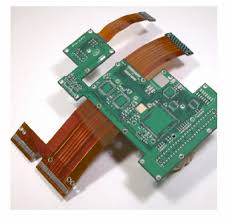
How do printed circuit board assembly services manage SMT components?
After the solder paste is applied, the PCB with its SMT components is moved to the reflow soldering oven. This is where the solder paste is heated to its melting point, forming a solid bond between the PCB and the components. Reflow soldering requires precise temperature control to ensure that the solder paste melts evenly and does not cause damage to the components or the PCB itself. Printed circuit board assembly services carefully calibrate their reflow ovens to ensure consistent and high-quality soldering results.
Additionally, quality control plays a significant role in the management of SMT components. Printed circuit board assembly services typically use automated optical inspection (AOI) systems to inspect the solder joints and component placement after reflow soldering. The AOI machines use high-resolution cameras to detect defects such as misaligned components, insufficient solder, or solder bridges. If any issues are identified, the board is flagged for rework, ensuring that only flawless products move to the next stage of production. In some cases, manual inspection may also be conducted, especially for more complex assemblies.
Another important aspect of managing SMT components is the storage and handling of these small and often sensitive parts. Printed circuit board assembly services ensure that SMT components are stored in controlled environments to prevent damage from moisture, static, or contamination. Components are typically stored in sealed bags with moisture-absorbing desiccants and are handled with tools designed to prevent electrostatic discharge (ESD). These measures help maintain the integrity and performance of the components throughout the assembly process.
In conclusion, printed circuit board assembly services manage SMT components through a combination of advanced automation, careful solder paste application, precise reflow soldering, and rigorous quality control. The management of these components requires a high level of expertise and attention to detail, as even the smallest errors in placement or soldering can result in product failure. By utilizing state-of-the-art technology and well-established best practices, PCB assembly services ensure that SMT components are handled with the precision and care required to produce reliable, high-quality electronic devices.

