
 admin
Flex PCB Manufacturer Meet Industry Standards
The development of 5G networks demands high-performance electronics that meet strict quality standards. Flex PCBs provide the performance and flexibility needed, while allowing them to fit into compact and irregular spaces. They can support large data rates, handle vibrations, and withstand harsh environments. To ensure compliance, a flex PCB manufacturer must have a robust quality management system and keep up with industry standards. They must also continuously improve their processes to stay competitive in the marketplace.
Finding the right flex pcb manufacturer is an important process that requires careful consideration. The best manufacturers are experienced and certified to create high-quality circuit boards. They have the right tools, equipment, and knowledge to create durable flex PCBs for various electronic projects. They are also committed to continuous improvement and innovation. This allows them to offer a competitive advantage and deliver the best possible results for their customers.
Identifying the top qualities and traits to look for in a flex pcb manufacturer will help you narrow your choices. Once you have the list of candidates, you can compare them against each other to find a good fit for your business. This will help you avoid settling for an unfit manufacturer that may have unforeseen consequences to your project.
How Does a Flex PCB Manufacturer Meet Industry Standards?
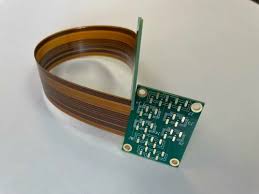
A flex PCB is a thin, flexible printed circuit board that combines copper foil and insulating dielectric layers for conductors. It can be constructed with one to six layers, with a choice of different materials. The copper is chemically etched onto the surface of the substrate to form the desired pattern. A layer of dielectric stiffener (such as FR4) is applied over the conductors to prevent warping, and solder mask is coated on the edges to protect them from contamination. Acrylic or epoxy based adhesives are used to bond the layers and conductors.
To allow the flex PCB to be mounted, it is treated with pressure-sensitive adhesives. These are removed from their backings and pressed against the bare circuit to adhere them in place. The adhesives are designed to withstand a range of temperatures and environmental conditions, ensuring the integrity of the flex circuit. For added protection, a metal shielding layer can be added to the PCB to prevent electromagnetic interference.
Once the flex circuits are finished, they undergo a series of testing and inspection. These tests include analyzing their mechanical stability and electrical performance. They are subjected to a range of environmental tests including thermal cycling, humidity, and vibrations to simulate real-world use.
The flexibility of a flex PCB makes it ideal for medical devices that need small, lightweight and reliable electronic assemblies. It can also conform to complex shapes, making it well suited for diagnostic equipment and wearable devices. The ability of a flex PCB to withstand vibrations and mechanical shocks makes it suitable for automotive applications. It can be incorporated into vehicles to save space and improve safety. It can also replace rigid connectors to make assembly and maintenance easier. Its durability and reliability also make it perfect for aerospace and defence applications.

